
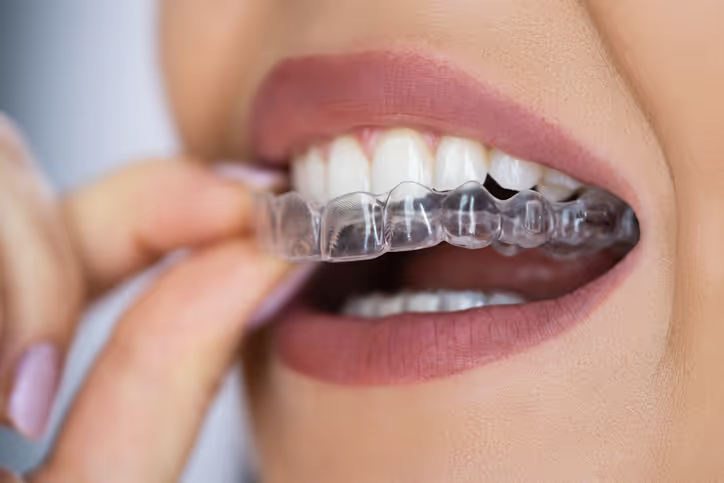
Invisalign and traditional braces both move teeth into better alignment, but they get there in different ways. Invisalign uses a series of clear, removable aligners and tends to suit mild to moderate crowding, gaps, and bite issues, while traditional braces use fixed brackets and wires that give an orthodontic team more control over complex movements. For most patients in Brentwood, the right choice comes down to how complex the bite problem is, how much the appearance of the treatment matters day to day, and how consistent you can be with wearing removable aligners.
What Invisalign Actually Involves
Invisalign is a system of custom, clear aligner trays that you switch out every one to two weeks. Each tray shifts your teeth a small amount, and over the course of treatment, those small movements add up to a straighter smile. Because the aligners are removable, you take them out to eat, brush, and floss, which means there are no food restrictions and no extra flossing techniques to learn around wires and brackets.
Invisalign at Liberty Dental Group uses digital impressions to design each patient's aligner series, so the fit is based on an exact scan of your teeth rather than a generic mold. Appointments to check progress are typically spaced further apart than with braces, since there is no wire to adjust.
What Traditional Braces Actually Involve
Traditional orthodontic treatment with braces uses metal or ceramic brackets bonded to each tooth, connected by an archwire that an orthodontic provider tightens or adjusts at each visit. Because the brackets are fixed in place, braces work around the clock without relying on the patient to remember to wear anything. That makes braces a dependable option for more complex bite corrections, significant rotations, or cases where a patient may not reliably wear removable aligners for the recommended 20 to 22 hours a day.
Braces do come with some day-to-day adjustments. Certain sticky or hard foods are off the table for the duration of treatment, and cleaning around brackets and wires takes a bit more care than brushing and flossing with removable aligners.
How Treatment Time Compares
Treatment time depends more on the complexity of the case than on which system you choose, but in general, mild to moderate Invisalign cases often wrap up in 6 to 18 months, while more involved orthodontic corrections with either system can take longer. The real variable is how consistently aligners are worn, since skipping hours or days can slow progress and extend the overall timeline. Braces, since they are fixed in place, do not have that same dependence on patient compliance, which is one reason they are still the more predictable option for complicated cases.
How Comfort and Daily Life Compare
Both options involve an adjustment period. New aligner trays can cause mild pressure or soreness for a day or two as teeth settle into the next position, while braces can cause some irritation from brackets and wires rubbing against the inside of the cheeks and lips, especially right after an adjustment. Aligners are generally considered more comfortable day to day since there is no hardware against the soft tissue of the mouth, but they do require the discipline of putting them back in after every meal and drink other than water.
For anyone who plays contact sports, travels frequently for work, or simply prefers not to have visible hardware in photos, Invisalign's low profile is often the deciding factor. For patients who want a treatment that works whether or not they remember to wear something, braces remove that variable entirely.
Who Tends to Be a Better Candidate for Each
Invisalign works well for adults and teens with mild to moderate crowding, spacing, or bite issues, and for patients who are motivated to wear removable aligners consistently. Traditional braces are often the better fit for more complex bite corrections, significant rotations, or younger patients who may need more direct oversight of their treatment. Neither option is universally better. The right fit depends on what your bite actually needs and how realistic it is for you to stick with a removable appliance.
The only way to know for sure which category you fall into is a consultation and a set of digital images or x-rays, so your dentist can look at the specific movements your teeth need to make.
Cost Factors to Ask About
Cost depends on the length of treatment, the complexity of the case, and your insurance coverage, since many dental plans apply orthodontic benefits to both Invisalign and traditional braces. Rather than comparing sticker prices between the two options, it is worth asking your provider how many aligner trays or adjustment visits your specific case is likely to need, since that is what actually drives the total cost. Liberty Dental Group verifies your insurance benefits ahead of treatment and offers financing through Cherry for patients who want to spread out payments.
What to Expect at Your Consultation in Brentwood
A consultation starts with a conversation about your goals, followed by a visual exam and digital images to map out your current bite. From there, your dentist will walk through whether Invisalign, traditional braces, or another option fits your specific case, along with a realistic estimate of how long treatment is likely to take. You will leave with a clear picture of what the process looks like before committing to either option.
After Treatment: Retainers Either Way
Whichever option you choose, teeth have a natural tendency to drift back toward their original position once active treatment ends, so both Invisalign and traditional braces are followed by a retention phase. Invisalign patients typically move into a clear retainer that looks similar to the aligners they just finished wearing, while patients coming out of braces are usually fitted for either a removable retainer or a thin wire bonded behind the front teeth. Retainers are worn far less often than aligners or braces, often only at night after the first several months, but skipping them is the most common reason teeth shift back after otherwise successful treatment.
Frequently Asked Questions
How long does Invisalign take compared to braces?
Mild to moderate Invisalign cases often finish in 6 to 18 months. Braces can take a similar amount of time for comparable cases, though more complex corrections with either system can run longer.
Does Invisalign hurt more than braces?
Both involve some soreness during the adjustment period. Aligners tend to cause mild pressure for a day or two after switching trays, while braces can cause irritation from brackets and wires, especially after a tightening visit.
Can teens use Invisalign instead of braces?
Yes. Invisalign for teens includes features like wear indicators and eruption tabs for growing mouths, and it can be a good fit for teens who are responsible about wearing their aligners consistently.
What happens if I don't wear my aligners enough?
Inconsistent wear slows progress and can extend treatment, since the aligners only move teeth while they are in place. Braces do not have this issue, since they work continuously.
Is Invisalign really invisible?
The aligners are clear and far less noticeable than metal brackets, though they are not completely undetectable up close. Most patients find they draw far less attention than traditional braces.
If you are weighing Invisalign against traditional braces, the team at Liberty Dental Group can walk you through both options based on what your bite actually needs. Schedule a consultation to get a clear picture of your timeline, your options, and what treatment would involve day to day.
