Restorative & Surgical Dentistry
If you're considering dentures in Brentwood, CA, you've come to the right place. Liberty Dental Group welcomes new patients and works to make treatment affordable through CareCredit, Cherry, and our in-house Liberty Membership Plan for patients without insurance. Whether you're missing all your teeth or just a few, our doctors sit down with you, explain your options in plain language, and help you decide what fits your smile, your budget, and your comfort level. Losing teeth can feel discouraging, but you don't have to sort it out alone.
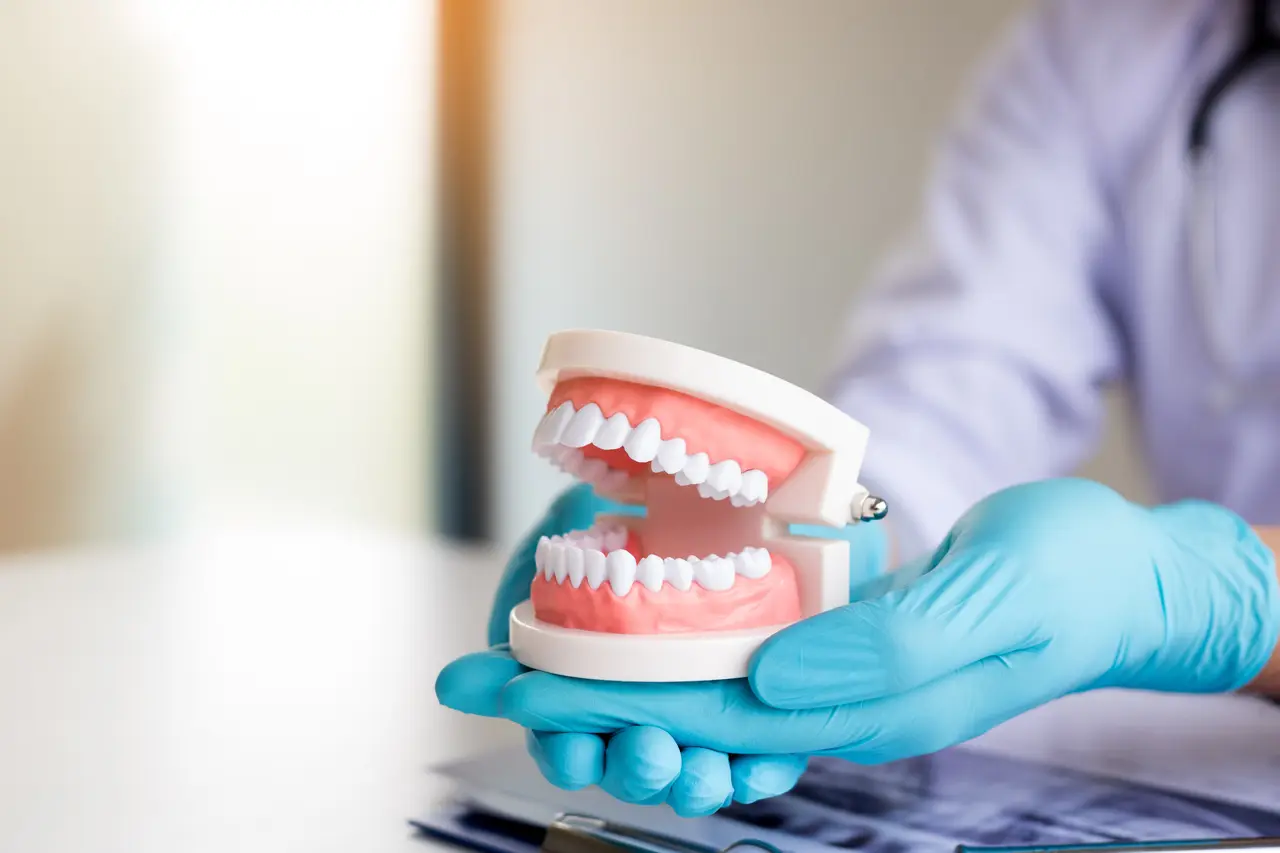
Full dentures replace an entire arch of teeth, top, bottom, or both. Partial dentures fill in gaps left by missing teeth while your remaining natural teeth stay in place. Both are custom made from an impression of your mouth, so they fit your gums and bite rather than a generic mold.
Some patients need a tooth pulled before a denture can be made properly. If that applies to you, we'll walk you through tooth extractions so you know exactly what to expect before treatment day. Dentures are part of our broader restorative & surgical dentistry services, which cover everything from single-tooth repairs to full mouth rehabilitation.
Dentures do more than fill empty spaces. They can help you:
We fit every denture individually, adjusting shape, color, and bite until it feels right for you. Because we know cost is often the biggest question, our team walks you through financing up front, including CareCredit, Cherry, and the Liberty Membership Plan, so there are no surprises later.
Getting dentures usually takes a few visits, not just one. Here's a general idea of what happens:
Some patients want a removable option, while others are curious about a version that snaps onto dental implants for extra stability. Both are valid paths, and our doctors are glad to walk through the pros and cons of each with you.
| Factor | Conventional Dentures | Implant-Retained Dentures |
|---|---|---|
| Stability | Rests on the gums, may shift when eating or speaking | Anchored to implants, stays firmly in place |
| Bone health | Does not stimulate the jawbone | Helps preserve jawbone over time |
| Treatment time | Ready in a few visits | Requires implant placement and healing time first |
| Daily care | Removed nightly for cleaning | Cleaned much like natural teeth |
| Upfront cost | Generally lower | Generally higher due to implant surgery |
If you'd like to learn more, our Implant-Retained Dentures page walks through candidacy and the process in more detail.
Once you have your dentures, a simple daily routine keeps them comfortable and lasting longer. Rinse them after eating, brush them gently with a denture brush, and soak them overnight in a solution made for dentures rather than hot water, which can warp the material. Keep up with regular checkups so we can catch sore spots, looseness, or wear early, before they turn into bigger problems.
If you're only missing a few teeth, a partial denture isn't your only option. Some patients are better suited to a fixed bridge, and others look into dental implants for a more permanent replacement. We're glad to compare these paths with you so you feel confident, not pressured, about the direction you choose.
Common questions
New to Liberty Dental Group or planning your next visit? Here are quick answers to the questions Brentwood families ask us most.
Most dentures last around 5 to 10 years with proper care, though this varies from person to person. Your gums and jawbone change shape over time, so relines or replacements are a normal part of long-term denture wear. Regular checkups help us catch fit changes before they cause discomfort.
Yes. We custom fit every denture to match your mouth, bite, and the shape of your face, and we work with you on tooth color and shape until you're happy with the look. It's normal to need a short adjustment period as your mouth gets used to the new denture.
A partial denture is often a good fit for this situation, since it fills the gaps while keeping your remaining healthy teeth in place. Depending on how many teeth you're missing and where they're located, a bridge or dental implants may also be worth discussing. Our doctors can review your mouth and lay out which options make sense for you.
You don't have to make this decision on your own. Our doctors will walk you through full dentures, partial dentures, and implant-retained alternatives so you understand what each one involves before you commit to anything.