Restorative & Surgical Dentistry
When a cavity or crack is too big for a simple filling but not severe enough to need a full crown, inlays and onlays in Brentwood, CA give you a conservative option that saves more of your healthy tooth. At Liberty Dental Group, Dr. Mike Molosky and Dr. Emily Molosky take the time to explain your tooth's condition and walk through every option with you before recommending a restoration. We welcome new patients from East County communities near Brentwood, and we offer flexible financing through CareCredit, Cherry, and our in-house Liberty Membership Plan, so a healthy smile stays within reach.
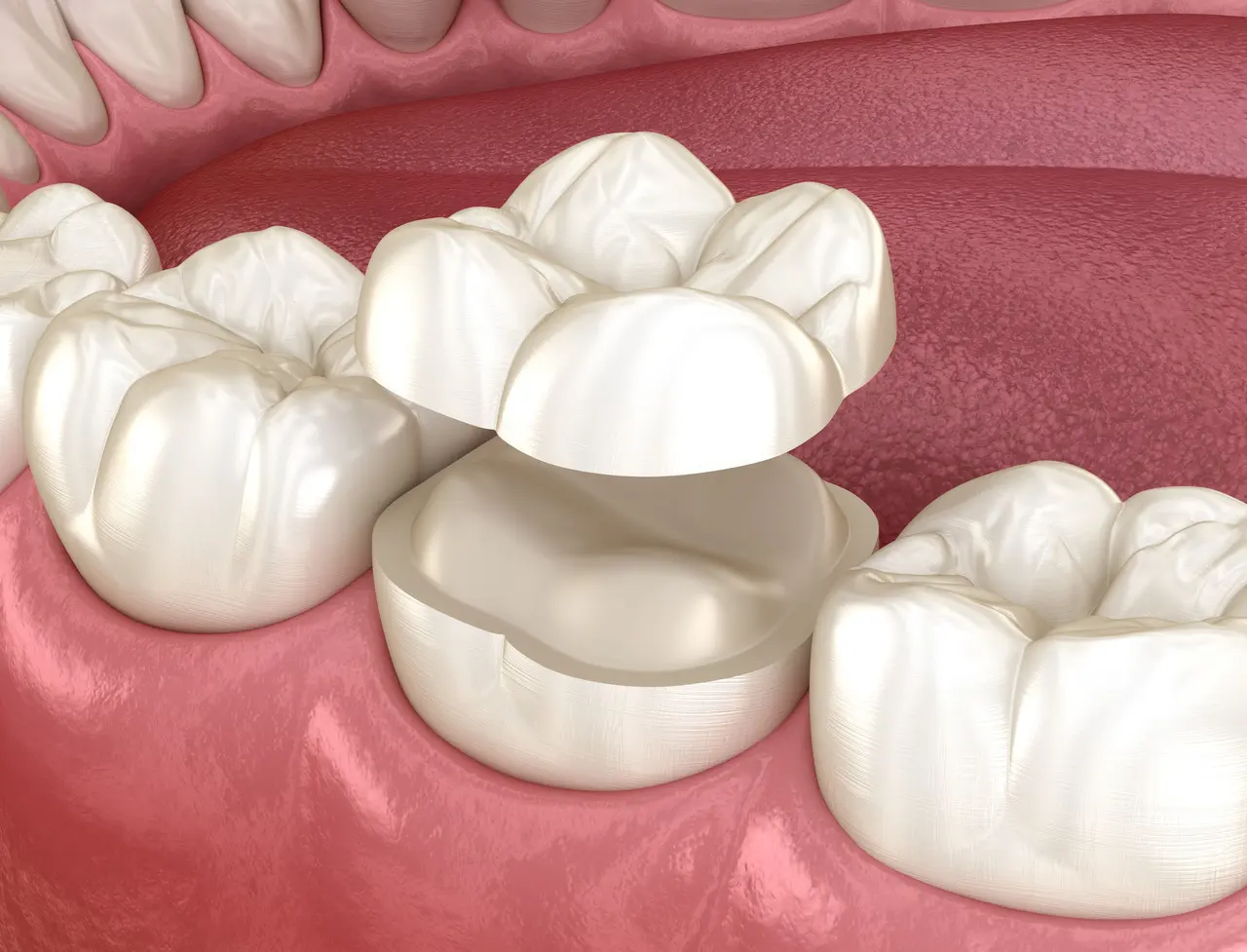
An inlay or onlay is a custom-made restoration that repairs a tooth without covering the whole biting surface the way a crown does. An inlay fits inside the grooves of a tooth, while an onlay covers one or more of the cusps, the pointed edges on top of a tooth. Both are made from durable materials like porcelain or composite resin and are bonded directly to the tooth, giving you strength without removing more of your natural structure than needed.
Think of inlays and onlays as a step between a filling and a crown. Fillings work well for small cavities, but when decay or damage covers more of the tooth, a filling may not hold up over time. A crown treats the whole tooth, which sometimes means removing more healthy structure than necessary. An inlay or onlay lets us treat just the damaged part.
Choosing an inlay or onlay comes with real, practical advantages:
We walk you through the pros and cons for your specific tooth so you feel confident in the plan, not just told what to do.
Getting an inlay or onlay usually takes two visits.
At your first visit, your dentist removes any decay or old filling material and shapes the tooth to receive the restoration. We take a digital impression of your tooth, which is more comfortable than the old putty trays many patients remember. A temporary restoration protects your tooth while a dental lab crafts your custom inlay or onlay to match your bite and tooth color.
At your second visit, we check the fit, make any small adjustments, and bond the finished piece permanently in place. Local anesthesia keeps you comfortable throughout, and we take our time so you never feel rushed.
Inlays and onlays work well for teeth that have moderate decay, a failing older filling, or a small crack, but still have enough healthy structure remaining that a crown isn't necessary. During your exam, one of our doctors will look closely at the tooth, review your dental history, and explain whether an inlay, an onlay, or another option from our restorative and surgical dentistry services fits your needs best.
If you're not sure which treatment applies to your situation, that's exactly what your consultation is for. We'd rather take time to explain your options than rush you into a decision.
Common questions
New to Liberty Dental Group or planning your next visit? Here are quick answers to the questions Brentwood families ask us most.
Fillings work best for small cavities and involve less tooth preparation. Inlays and onlays treat moderate damage that a filling can't fully support but that doesn't require covering the entire tooth like a crown does. Your dentist will recommend the option that removes the least healthy structure while still protecting your tooth long-term.
With good home care and regular checkups, inlays and onlays are designed to hold up well for many years. Their lifespan depends on factors like the material used, your bite, and how well you care for your teeth. Keeping up with cleanings and exams helps us catch any wear early.
Many dental insurance plans offer partial coverage for inlays and onlays since they are considered a restorative treatment. If you are uninsured or want more flexibility, we also offer financing through CareCredit, Cherry, and our in-house Liberty Membership Plan. Our team can help you understand your specific costs before treatment begins.
Let's take a look at your tooth together and find the most conservative path forward.